
In an era where you can summon a car in minutes and dinner in seconds, the beauty industry has remained surprisingly fragmented. For many Australians, booking a high-quality skin treatment or a lash lift still feels like a game of trial, error, and high price tags—especially as the cost-of-living crisis forces many to tighten their belts.
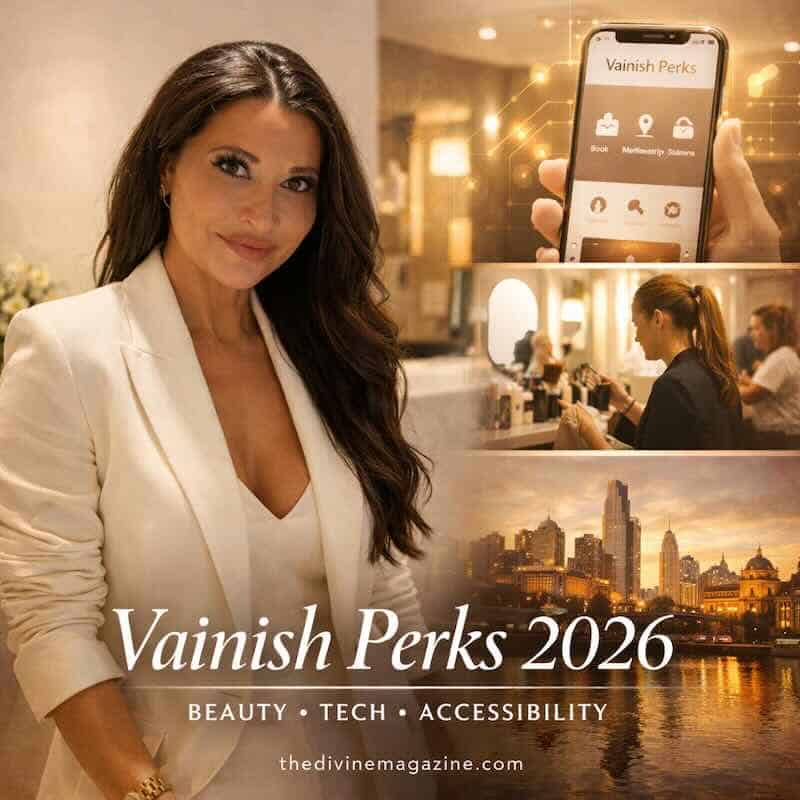
Enter Vainish Perks, a new Melbourne-based platform aiming to do for salons what Uber did for transport. By aggregating trusted providers into a single membership-based ecosystem, founder Svetlana Foox is proving that even in a tough economy, self-care doesn’t have to be a luxury—if the industry is willing to work together.

The “Uber for Beauty” Vision
You’ve explicitly compared Vainish Perks to Uber. Beyond the booking aspect, does Vainish Perks aim to standardize the pricing and service quality across different salons, or do partners maintain full autonomy?
Our partners maintain full autonomy of their businesses. VainishPerks purely aims to support the beauty industry while keeping them all independent. We support them to gain more exposure, give them more visibility, and fill empty chairs. While supporting women to have easier access to salons without having to browse through many businesses, support them to access self care while saving hundreds.
Why do you think the beauty industry has lagged so far behind food and transport in terms of digital disruption?
The beauty industry is very relationship based. Small business owners still heavily rely on social media, word of mouth, and phone bookings. There are not many centralized platforms for the beauty industry where clients can easily browse and book. Small businesses are still doing everything manually—marketing, bookings, and admin.
You mentioned an “Uber moment” for salons. In the transport world, this led to a massive shift in how drivers work. How do you see the daily operations of a local salon changing once they join your ecosystem?
Once businesses join VainishPerks, they don’t need to rely so much on chasing customers. The goal is to give them more exposure and help fill those empty spots they already have.
It’s not just another platform—it’s a steady flow of customers coming through the door. People are actively booking through VainishPerks and going straight to them. We also want new customers to come through who maybe before felt guilty spending on self care, but now actually have the chance to get those brows done, their hair done, all the things they have been putting off—at more accessible, exclusive prices through VainishPerks
Collaboration vs. Competition
You advocate for “collaborating smarter” rather than “competing harder.” How does the platform prevent “cannibalization,” where salons feel they are fighting for the same pool of platform users?
Right now, a lot of salons feel like they’re constantly competing for attention—posting, boosting ads, trying to stay visible on social media.
It’s more about clients actually finding what they want in one place and booking directly, instead of businesses having to chase them all the time.
It also changes how people see self-care. We’re starting to see more women who previously felt guilty spending on themselves now actually being able to access those services again—whether it’s brows, hair, or skin—at more affordable, exclusive prices through VainishPerks.
So it’s not just a business shift; it’s also a consumer shift in how women can now access these services at affordable prices.
I heard women saying, “I haven’t had a haircut for 12 months,” or “I can’t recall the last time I bought new clothes.” We want VainishPerks to change all that.
How do you convince a boutique salon owner that sharing visibility with a competitor on the same app is actually in their best interest?
I understand why a salon owner would think, “Why would I sit next to my competitor?”
But the way we structure VainishPerks is very intentional—we don’t load the same type of business into the same street or area. We spread partners out, so you’re not seeing ten of the same hair salons or skin clinics competing side by side.
We also work across multiple categories—beauty, wellbeing, fitness, massages—so it’s a really broad ecosystem, not just one saturated space.
And I don’t actually see it as direct competition anyway. Every business still has its own point of difference and its own way of working with clients.
What it really does is give them more exposure and awareness, not take anything away.
We’ve also had a really strong response within just a few months of launching, with over 150 partners already jumping on board. A big reason for that is they love the concept—it gives them another avenue of exposure, completely new clients they wouldn’t have reached before, and bookings they wouldn’t normally get.
So far, we honestly haven’t had anyone see it as a threat or competition at all.
At the same time, customers get to choose what suits them—based on location, service, and what fits within their budget with the offers each business chooses to put on.
So it’s less about competing and more about being seen by the right people.
Many salons currently use Instagram or Google Ads to fight for attention. How does Vainish Perks specifically silence that “noise” for a small business owner?
It’s very simple. Members who join VainishPerks are actively looking to book a treatment, not just scrolling or browsing.
So instead of salons trying to cut through all the digital noise online—posting, boosting ads, hoping the algorithm shows them—we bring them in front of people who already have intent to book.

Economic Resilience & Membership
With rising inflation, beauty is often the first “luxury” to be cut from a budget. Does Vainish Perks see itself as a tool for survival for these businesses or a tool for growth?
VainishPerks was created exactly because of the cost of living pressure and, honestly, from my own experience as well. In my own home, I found I was the one feeling guilty about spending money on myself.
I would delay getting my nails done, or even a massage, when I was in pain, just because I felt like it wasn’t a priority.
That’s really where VainishPerks came from—wanting to make self-care still accessible for women, even when things are tight financially.
Because self-care isn’t just a luxury. It’s important for mental health, especially when you’re balancing work, kids, and everything else life throws at you.
For businesses, I see it as both a tool for survival and a tool for growth. In tougher periods, it helps keep chairs filled and brings in consistent bookings they might otherwise lose. But long-term, it also becomes a growth channel—because it introduces them to new clients they wouldn’t have reached before, many of whom come back and become regulars.
So it supports them in the moment but also builds their client base over time.
You emphasized that this isn’t about “discounting beauty” but “modernizing delivery.” Can you explain the distinction between a “concessionalized price” on your platform and a standard industry discount?
It’s not just a discount platform.
There’s a big difference between a standard discount and what we do on VainishPerks.
With us, the offers are set by the business and used in a more intentional way—mainly to bring in new clients who probably wouldn’t have found them otherwise.
And the goal is that if the service is good, they come back and become regular, paying full price.
So it’s not really about discounting. It’s more about getting exposure and turning that into long-term clients.
Why choose a membership-based model for consumers instead of a simple commission-per-booking model like traditional marketplaces?
I chose a membership model because people who actually join VainishPerks and pay for a membership have real intent to make bookings.
They’re not just browsing or casually scrolling—they’ve already made a decision to use the platform, save money, and book services.
That means salons are getting more serious, higher-quality clients, not random traffic.
Scaling & The Future
Platforms like Uber only work once they reach a “critical mass.” What is the biggest hurdle in scaling the partner network across Australia right now?
We don’t actually need mass businesses on board. We need the right ones, good, reputable businesses that customers genuinely want to go to across categories and locations.
What’s been really positive so far is the response. A lot of businesses have jumped on because they genuinely love the concept. It doesn’t feel like just another platform to them; it feels like a community.
There’s also a real sense of it being a bit of a sisterhood, with women supporting women and making self-care more accessible again.
As you grow, how do you curate the network to ensure that “affordability” doesn’t lead to a dip in the “quality” that beauty consumers are so protective of?
For us, it’s really important that quality never drops just to scale quickly.
We don’t want every business on the platform—we want the right ones. Reputable, trusted salons and providers that people actually want to go to.
We also check reviews and general reputation before bringing anyone on, so there’s a level of trust from the start.
Affordability should never mean lower quality. It should just mean better access to good services people can rely on.
If you succeed in “reimagining the industry,” what does the Australian high street look like for beauty services in five years?
I want every woman across Australia to have access to self-care through VainishPerks.
I want it to be something women actually use in their everyday life—not something they feel guilty about or cut out when money gets tight.
And I want more and more businesses to join, so empty seats don’t just sit there unused. I want those gaps filled, I want those appointments booked, and I want salons to feel supported, not stressed about where their next client is coming from.
That’s really the goal for me—VainishPerks being everywhere in Australia, making self-care more normal, more accessible, and something women can actually keep in their lives.