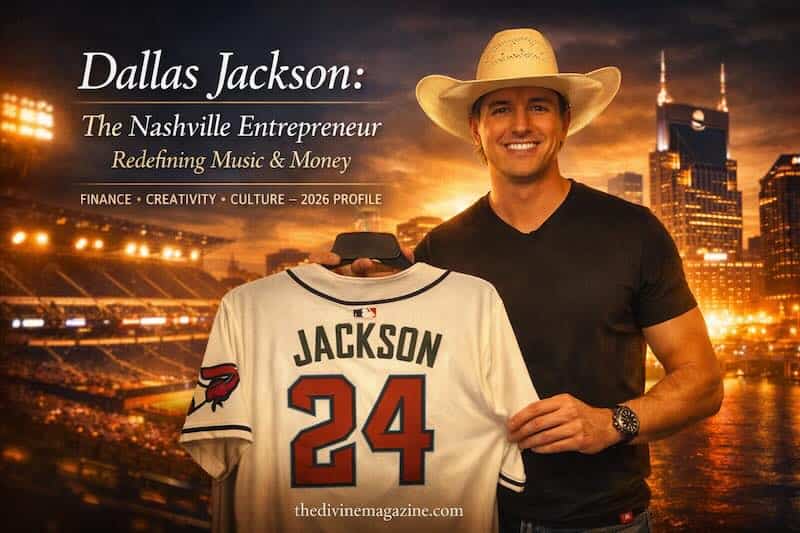
Whether you’re catching a set on Broadway or navigating the high-stakes world of financial planning, Dallas Jackson is a name that commands attention in Nashville. As a true multi-hyphenate, Jackson has successfully bridged the gap between the structured world of finance and the grit of the music industry.
His journey is a masterclass in professional evolution. After a rapid ascent in the banking world—where he built divisions from the ground up—he walked away from the corporate ladder to build something of his own. From co-founding massive cultural staples like Nashville Rodeofest to launching TipSee Music, a patented technology revolutionizing how independent artists get paid, Jackson is redefining the “Nashville entrepreneur.”
Today, he balances his role as an independent financial advisor at Finwell with his mission to modernize the creator economy—all while navigating his newest and most important role: fatherhood.
In this conversation, we dive into the logistics of live events, the future of music monetization, and how a background in finance provides the ultimate blueprint for creative disruption.

On the Transition from Finance to Entrepreneurship
What was the moment you realized the corporate path wasn’t where you belonged?
I grew up respecting entrepreneurship and had always aspired to build something of my own. Early on, I thought I could do that within finance, build a “business” inside a large firm. However, the reality is that in a large corporate environment, there are rules, limitations, and structures that ultimately dictate how you operate, which are constantly changing to benefit the company. At a certain point, I realized I wanted to create something fully my own, something built around a passion I actually enjoy day in and day out. That’s what led me to TipSee Music.
How does your financial background influence how you approach burn rate and scaling TipSee?
It’s less about directly controlling every number and more about awareness. I’ve seen companies raise capital and grow too fast, burning through cash with a short runway. With TipSee, I’m always building toward a point where the business can sustain itself. I never want to overbuild to the point where if we don’t raise again, the company can’t operate. That mindset has shaped how we grow.
What habits carried over from finance into the early days of The HONDO RodeoFest?
One of the reasons I left corporate finance was that there was actually too much structure. You couldn’t always solve obvious problems quickly. But what did carry over was professionalism and discipline. How you handle relationships with clients, vendors, and partners is critical. Even in the chaos of building The Hondo RodeoFest, I made sure we maintained a high professional standard and stayed diligent, especially when it came to anything involving capital or partnerships.
On TipSee Music and the Creator Economy
Why focus on local performers instead of the high-end touring circuit?
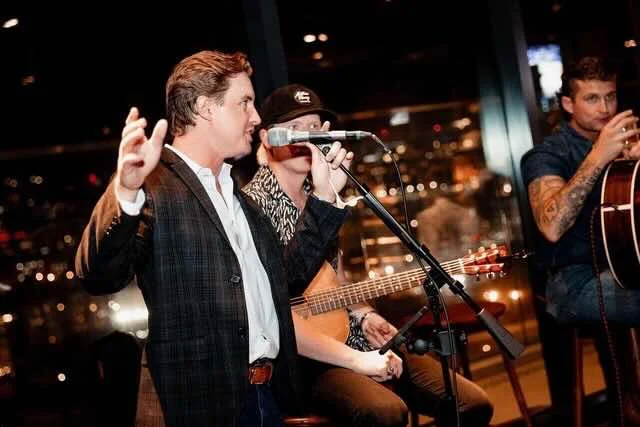
It started as a more attainable, grassroots market, but more importantly, I saw real pain points. Smaller artists are running their own businesses day-to-day, and giving them tools to operate more efficiently is something I’m passionate about. Beyond that, the goal isn’t just to streamline payments or help artists make more money; it’s to modernize the live music environment at the local level. By capturing real data, we can help identify artists who are actually putting in the work and connecting with audiences. I want to bring back that idea of being “discovered on Broadway,” but with real data behind it.
How do you see the relationship between venues, artists, and fans evolving through your technology?
The focus is on reducing friction across the board. Artists should be able to get booked easily, get paid securely, and present real, verifiable data to venues. At the same time, venues should be able to discover talent beyond generic profiles.
On the fan side, it’s about building engagement and eventually rewarding fans who consistently support live music. Most people love live music; they just want to feel part of it. Long term, it’s about building a movement where fans directly contribute to an artist’s growth.
At the same time, while many artists rely on tools like Venmo, we’re building a secure platform that removes risk. Fans know their payment information is protected, and artists benefit from a single, streamlined payout, no juggling multiple QR codes or worrying about payments being reversed months later.
What was the hardest part of translating a live performance into a software experience?
The biggest challenge was making it what I call “drunk-friendly.” The goal is to remove as much friction as possible. When someone scans a QR code at a show, it needs to be instant tip, request a song, and engage without confusion or unnecessary steps. We do capture data, but the user experience comes first. If it’s not seamless, artists don’t make more money, and that’s the whole point.

On Event Production (Hondo RodeoFest & Beyond)
What is the biggest logistical hurdle in building a large-scale event?
One of the biggest hurdles was designing and perfecting the CAD, the blueprint/layout for the entire event. You’re balancing multiple priorities at once: fire marshal requirements, stadium regulations, audio engineering, and overall flow. At the same time, you’re trying to maximize sightlines and create the best possible experience from every seat. Getting all of that right while maintaining the energy of a large-scale event is a complex challenge.
Tell us about a time things didn’t go according to plan and how you pivoted.
Early on, one of the biggest challenges was simply getting the right partners in place. As a first-year event, it was difficult to get people to trust the vision, especially when it came to production and talent pricing. I leaned on my network and was introduced to a few options, including Jason Rittenberry and his team at Tristar Production Group. Even though they hadn’t produced something at that scale before, I advocated for nearly a year to bring them in.
That decision ended up being critical; they helped us get the event off the ground, and since then, that experience has also significantly contributed to the growth of their company getting them into markets they had never worked in before.
On Balancing Roles and Fatherhood
How has becoming a father changed your perspective on risk?
It’s made me more intentional. I used to trust people more freely and assume others would operate the way I do. Over time, I’ve learned to be more careful and selective about who I partner with. Now, it’s not just about business decisions, it’s about protecting my family’s future. That’s changed how I approach risk across the board.
The Bigger Picture
What connects your work across finance, music, tech, and events?
I’m very operationally driven, and I’m passionate about building and improving systems especially in music and events. For me, it’s about modernizing the industry without taking away what makes it special. I want to create opportunities for people who put in the work to succeed, and I want events to continue evolving into better experiences that people genuinely enjoy and come back to year after year.
How has working with an all-women-owned firm like Finwell influenced your leadership style?
My leadership style at TipSee was already developing before Finwell, but working with Breanna and the Finwell team reinforced the value of strong, thoughtful leadership. I have a lot of respect for that environment. I’ve also found that working with women often brings a high level of organization, efficiency, and less ego into the process, which I really value when building teams and partnerships.
Do you see yourself as a bridge between Nashville’s music and tech scenes?
I do. Tech is a broad category, but when it comes to music tech, I want to be a positive force in that space over the next five years. My goal is to build technology that elevates artists and enhances events not technology that replaces creativity or exploits it.
I’m very direct about this: I don’t support the use of AI in ways that harm artists, whether that’s replacing songwriting or using their work without permission. I want to build the opposite tools that help artists grow, succeed, and maintain control over their work as the industry evolves.