
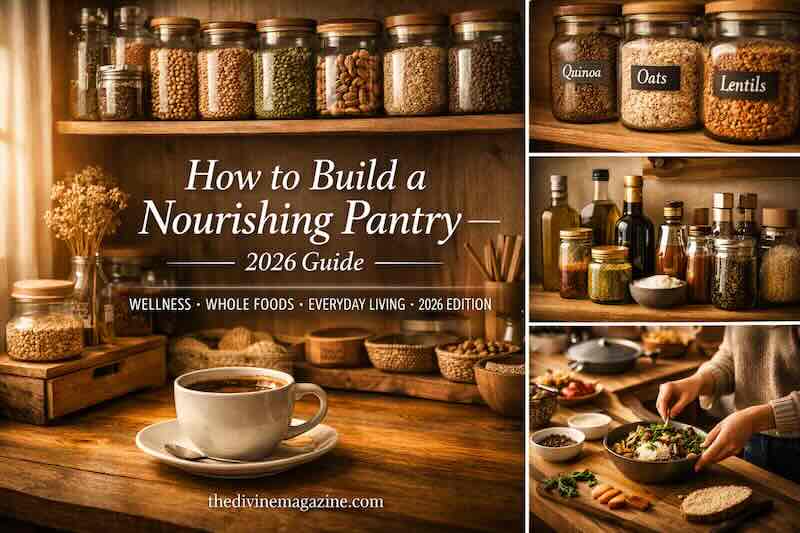
Building a nourishing pantry isn’t about having a picture-perfect kitchen — it’s about having the right ingredients on hand to make wholesome, satisfying meals without stress. A well-stocked pantry supports your health, saves money, and makes it easier to cook at home, even on busy days. In 2026, with rising food costs and more focus on wellness, creating a thoughtful, nutrient-dense pantry is one of the smartest lifestyle upgrades you can make.
- What Is a Nourishing Pantry?
- 1. Stock Up on Whole Grains and Complex Carbs
- 2. Include Shelf-Stable Protein Sources
- 3. Don’t Forget Healthy Fats
- 4. Keep Canned and Jarred Essentials on Hand
- 5. Build a Flavor Library: Herbs, Spices, and Condiments
- 6. Smart Snacks and “Bridge” Foods
- 7. Plan Around Your Real Life (Not an Ideal One)
- 8. Budget-Friendly Strategies for a Nourishing Pantry
- 9. Storage, Rotation, and Food Safety
- 10. Adapting Your Pantry to Dietary Needs
- Conclusion: A Pantry That Nourishes Your Everyday Life
- FAQ: Building a Nourishing Pantry
This guide will walk you through the essentials of a nourishing pantry: what to stock, how to organize it, and how to adapt it to your preferences, budget, and dietary needs.
What Is a Nourishing Pantry?
A nourishing pantry is built around whole, minimally processed ingredients that support balanced meals — think fiber-rich grains, quality proteins, healthy fats, and flavor-boosting herbs and spices. It’s less about restriction and more about making it easy to put together meals that leave you energized and satisfied. For a deeper dive into nutrient-dense foods, see Healthline’s list of healthy foods.
1. Stock Up on Whole Grains and Complex Carbs
Whole grains and complex carbohydrates form the backbone of many nourishing meals. They provide sustained energy, fiber, and important vitamins and minerals.
- Whole grains: Brown rice, quinoa, oats, barley, farro, buckwheat.
- Pasta and noodles: Whole-wheat pasta, lentil or chickpea pasta, soba noodles.
- Starchy staples: Rolled oats, polenta, whole-grain couscous.
Rotate a few favorites and store them in airtight containers to extend freshness. For guidance on whole grains and heart health, visit Harvard’s Nutrition Source.
2. Include Shelf-Stable Protein Sources
Protein keeps you full and supports muscle repair, immune function, and overall health. A nourishing pantry includes a mix of plant-based and animal-based shelf-stable proteins.

- Legumes: Dried or canned beans (black, kidney, cannellini), lentils, chickpeas, split peas.
- Canned fish: Tuna, salmon, sardines (ideally in water or olive oil).
- Nuts and seeds: Almonds, walnuts, pumpkin seeds, sunflower seeds, chia, flax.
- Nut and seed butters: Peanut butter, almond butter, tahini.
These ingredients make it easy to build balanced meals quickly — think bean chili, lentil soups, or tuna salads. For more ideas, check EatRight’s pantry protein essentials.
3. Don’t Forget Healthy Fats
Healthy fats support brain function, hormone balance, and satiety. They also make food taste richer and more satisfying.
- Oils: Extra-virgin olive oil, avocado oil, cold-pressed rapeseed/canola oil.
- Other fats: Ghee, coconut milk (canned), olives.
- Nuts and seeds: Double as protein and fat sources.
Store oils away from heat and light to preserve quality. For a breakdown of healthy fats and how to use them, see American Heart Association’s guide to fats.
4. Keep Canned and Jarred Essentials on Hand
Canned and jarred foods can absolutely be part of a nourishing pantry when you choose wisely. They’re convenient, budget-friendly, and great for quick meals.
- Tomato products: Crushed tomatoes, passata, tomato paste.
- Vegetables: Canned corn, peas, artichokes, roasted peppers.
- Coconut milk and broth: For soups, curries, and stews.
- Quality sauces: Tomato sauce, pesto, salsa (watch for added sugar and sodium).
Look for low-sodium options and short ingredient lists. For tips on reading labels, visit FDA’s Nutrition Facts label guide.
5. Build a Flavor Library: Herbs, Spices, and Condiments
A nourishing pantry isn’t just about nutrients — it’s also about flavor. Herbs, spices, and condiments help you transform simple ingredients into meals you actually crave.
- Dried herbs: Oregano, basil, thyme, rosemary, dill.
- Spices: Cumin, paprika, turmeric, cinnamon, chili flakes, curry powder.
- Condiments: Mustard, vinegar (apple cider, balsamic, rice), soy sauce or tamari, hot sauce.
- Fermented items: Sauerkraut, kimchi, miso paste (refrigerated after opening).
Spices also offer antioxidant and anti-inflammatory benefits. For inspiration on cooking with spices, explore Minimalist Baker’s essential spice list.
6. Smart Snacks and “Bridge” Foods
Healthy snacks help you stay nourished between meals and prevent impulsive choices. Stock a few options that combine fiber, protein, and healthy fats.
- Snack ideas: Whole-grain crackers, rice cakes, roasted chickpeas, trail mix, dark chocolate (70%+ cocoa).
- Breakfast helpers: Muesli, granola (low sugar), shelf-stable plant milks.
These “bridge” foods make it easier to build quick breakfasts and snacks without relying on ultra-processed options.
7. Plan Around Your Real Life (Not an Ideal One)
The best pantry is the one you actually use. Take a realistic look at your schedule, cooking skills, and preferences. If you love simple one-pot meals, prioritize grains, beans, and sauces. If you bake often, keep flours, baking powder, and sweeteners on hand.
Start with a short list of “anchor meals” you cook regularly — like pasta with tomato sauce, grain bowls, or soups — and reverse-engineer your pantry from there. For meal-planning frameworks, see Budget Bytes’ pantry meal plans.
8. Budget-Friendly Strategies for a Nourishing Pantry
You don’t need to buy everything at once. Build your pantry gradually and focus on versatile staples that work across multiple recipes.
- Buy in bulk: Grains, beans, oats, and nuts are often cheaper in bulk.
- Prioritize basics first: One oil, one grain, one bean, one nut, a few spices.
- Use what you have: Plan meals around existing items before shopping.
For more budget-conscious ideas, explore MyPlate’s tips for eating healthy on a budget.
9. Storage, Rotation, and Food Safety
Good storage habits protect your investment and reduce food waste. Use clear containers, label them with dates, and keep older items at the front so they’re used first.
- Dry goods: Store in airtight containers in a cool, dark place.
- Nuts and seeds: Keep in the fridge or freezer for longer freshness.
- Canned goods: Check expiry dates regularly and rotate stock.
For detailed food storage guidance, visit FoodSafety.gov’s FoodKeeper resource.
10. Adapting Your Pantry to Dietary Needs
Whether you’re vegetarian, gluten-free, dairy-free, or simply aiming to eat more plants, your pantry can be tailored to support your goals.
- Gluten-free: Focus on rice, quinoa, buckwheat, certified gluten-free oats.
- Plant-based: Emphasize beans, lentils, tofu (shelf-stable), nuts, seeds, and whole grains.
- Low-sugar: Choose unsweetened plant milks, no-sugar-added sauces, and whole fruits over juices.
For evidence-based guidance on different eating patterns, see Academy of Nutrition and Dietetics’ healthy eating resources.
Conclusion: A Pantry That Nourishes Your Everyday Life
Building a nourishing pantry is less about perfection and more about intention. By stocking versatile whole foods, smart proteins, healthy fats, and flavor-boosting staples, you create a foundation for meals that support your energy, mood, and long-term health. Start small, build gradually, and let your pantry evolve with your lifestyle — over time, it becomes one of your most powerful tools for living well.
FAQ: Building a Nourishing Pantry
1. Where should I start if my pantry is almost empty?
Begin with a short list of essentials: one grain (like rice or oats), one bean, one oil, a couple of spices, and a protein source such as canned beans or tuna. Build from there as your budget allows.
2. How do I know if a packaged food is “nourishing”?
Check the ingredient list and nutrition label. Look for short ingredient lists, higher fiber and protein, and limited added sugars and sodium. The FDA’s label guide is a helpful reference.
3. Can a nourishing pantry include treats?
Yes. A sustainable approach to eating leaves room for enjoyment. Dark chocolate, good-quality cookies, or your favorite snack can absolutely fit — the key is balance and portion awareness.
4. How often should I review and declutter my pantry?
A quick check once a month works well for most households. Toss expired items, move older foods to the front, and make a note of what you’re not using so you can adjust future shopping.
5. Is it possible to build a nourishing pantry on a tight budget?
Absolutely. Focus on affordable staples like beans, lentils, oats, rice, frozen vegetables, and basic spices. Plan simple meals and buy in bulk when possible. Over time, a budget-friendly pantry can still be deeply nourishing.