
The enchanting tourist places of Egypt have attracted visitors for decades thanks to its unique position between Asia, Africa, and Europe. Aswan, in particular, is a city where ancient temples, Nubian culture, and modern engineering meet along the Nile. Now it is time to visit one of the most beautiful cities in the world, the city of Aswan, and discover why it remains a must-see destination in 2026.
Although the landmarks of ancient Egypt are quite different from any historical monuments in the whole world, they are not just the remains of buildings or palaces, but a complete civilization still visible in temples full of splendor and beauty. Aswan is not only an open-air museum of ancient monuments; it also offers natural scenery, Nubian heritage, and modern icons like the High Dam that symbolize the struggle and success of the Egyptian people. You can experience many of these highlights through curated Aswan day tours and Nile cruises.
Best Places to Visit in Aswan (2026 Guide)
From UNESCO-rescued temples to colorful Nubian villages, Aswan offers a blend of history, culture, and river life that feels timeless yet very alive. Below are the top places you shouldn’t miss on your next trip.
Abu Simbel Temple
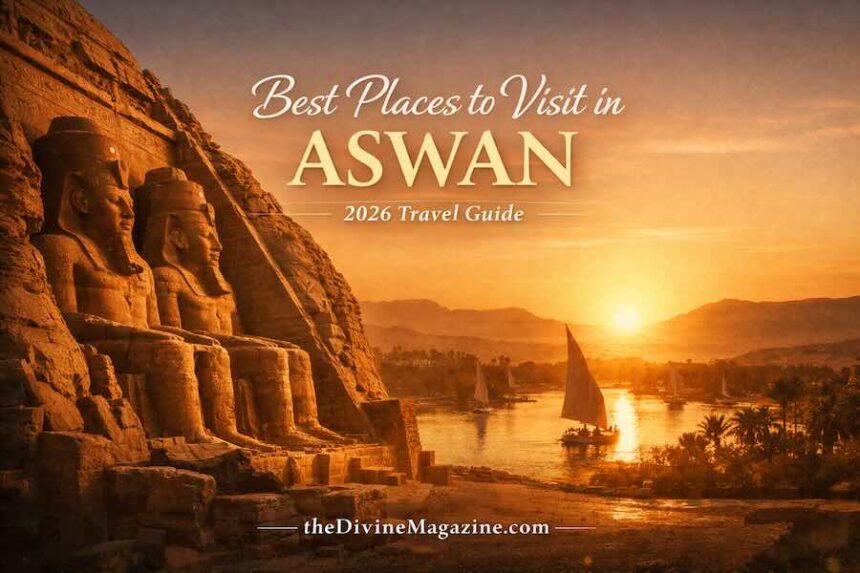
The two temples of Abu Simbel are among the most important tourist attractions in Aswan. Originally carved into a cliff on the west bank of the Nile, they now stand west of Lake Nasser, the largest artificial lake in the world, after being relocated in a massive UNESCO-led rescue project during the construction of the High Dam. These temples were built by King Ramses II around 1244 BC: the Great Temple is dedicated to him and fronted by four colossal statues, with smaller statues of his children, wife, and mother at their feet.
Twice a year, thousands of visitors gather to witness the famous solar alignment, when the sun’s rays illuminate the sanctuary and the statue of Ramses II. It’s one of Egypt’s most spectacular events. To learn more about the rescue campaign, see UNESCO’s Nubia Campaign. Many travelers visit Abu Simbel on a day trip or as part of Aswan day tours.
Temple of Philae
The Temple of Philae is one of the most iconic sights in Aswan and a favorite among visitors worldwide. It was also saved from flooding by a UNESCO initiative in the 1960s and moved from Philae Island to nearby Agilkia Island, south of Lake Nasser. The relocation took nearly nine years and involved advanced engineering techniques and international cooperation.

Dating back to the 3rd century BC, Philae was dedicated to the goddess Isis and later influenced by Greek, Roman, and Byzantine eras, each leaving its mark on the temple walls. Visitors can admire towering columns, detailed reliefs, and murals with exquisite carvings. Reaching the temple by boat on the Nile is an experience in itself, offering countless photo opportunities. For more background, explore Egypt’s official monuments page for Philae.
Aswan High Dam
The Aswan High Dam is one of the most significant modern landmarks in Egypt and a symbol of national pride. Completed in the 1960s, it was one of the largest engineering projects of the 20th century and a major challenge for the post-1952 revolution government. Beyond its impressive scale, the dam tells the story of the Egyptian people’s determination to control the Nile and secure their future.
The High Dam protects Egypt from devastating Nile floods and droughts by storing vast amounts of water in Lake Nasser. It also generates hydroelectric power that supports industry and lights up cities and villages across the country. For an overview of its impact, you can read more on Encyclopaedia Britannica. The viewpoint from the dam offers sweeping views of Lake Nasser and the surrounding desert.
The Unfinished Obelisk of Hatshepsut
Located in the southern part of the ancient granite quarries, the Unfinished Obelisk is one of Aswan’s most fascinating archaeological sites. It is the largest known ancient obelisk, still lying in situ, and offers a rare glimpse into the stone-working techniques of the ancient Egyptians. Most scholars believe it was commissioned during the reign of Queen Hatshepsut.
A crack that appeared in the granite caused work to stop, leaving the obelisk partially attached to the bedrock. Visitors can walk around the site, observe tool marks, and see carvings of animals and birds on the surrounding rock. For more context on obelisks, visit The Met’s essay on Egyptian obelisks.
The Nubian Museum
The Nubian Museum is one of Aswan’s most distinctive attractions and a key stop for anyone interested in Nubian culture. It presents a rich and important chapter of history that developed alongside ancient Egyptian civilization. Designed by Egyptian architect Mahmoud al-Hakim, the museum uses local stone and architectural forms inspired by prehistoric caves and traditional Nubian houses.
Inside, you’ll find pottery, small sculptures, coins, bronze vessels, and artifacts that trace Nubian life from prehistory to modern times. The museum also reflects layers of different civilizations, including Islamic influences. The ancient Nubian civilization continues to attract researchers worldwide. Learn more via Egypt’s official Nubian Museum page.
Kom Ombo Temple
Kom Ombo Temple stands dramatically on the east bank of the Nile and is unique for its double design. It was dedicated to two gods: Horus the Elder and Sobek, the crocodile god. The temple has two symmetrical entrances, halls, and sanctuaries, reflecting this dual worship. Inside, you’ll find beautifully carved columns, reliefs, and inscriptions that reveal the religious life of ancient Egyptians.
One of the highlights is the nearby Crocodile Museum, which displays mummified crocodiles and related artifacts. What makes Kom Ombo especially memorable is the journey to reach it—most visitors arrive by Nile cruise, enjoying the scenery and river breeze along the way. For more inspiration, see Lonely Planet’s guide to Kom Ombo.
The Nubian Village
The Nubian village near Aswan offers a vivid and authentic picture of Nubian life today. Nubian culture has its own distinct traditions in clothing, food, music, and architecture. Houses are often painted in bright colors, decorated with geometric patterns and local motifs, and built using materials that keep interiors cool in the desert heat.
Visitors are welcomed warmly and can try on Nubian clothes, taste traditional dishes, and browse handmade crafts and souvenirs. You’ll also notice how clean and well-kept the streets and homes are—hygiene is truly a way of life here. For a cultural overview, you can read more about Nubian heritage on BBC Travel.
Kalabsha Temple
Kalabsha Temple is one of the most important Nubian temples and a beautiful example of late Egyptian temple architecture. Built around 30 BC during the early Roman era, it was dedicated to the Nubian sun god Mandulis. Like Philae and Abu Simbel, Kalabsha was also relocated to save it from the rising waters of Lake Nasser.
Today, the temple stands on an island in Lake Nasser, not far from the High Dam, about 16 km from Aswan. The setting is serene, with the temple framed by water and desert. Many visitors include Kalabsha as part of a Lake Nasser cruise or a dedicated boat trip. More details can be found via UNESCO’s Nubian Monuments listing.
Aswan Old Souks
Aswan’s Old Souk, also known as the Sharia Market, is a colorful bazaar and one of the best places to shop for affordable souvenirs. Located a few blocks from the Nile, it stretches parallel to the river and is filled with Egyptian and African goods.
Vendors sell perfumes, peanuts, henna powder, dried hibiscus flowers, spices, dates, Nubian shirts, and Egyptian-style souvenirs. In the side alleys, you’ll find Nubian-inspired items such as baskets, amulets, carpets, Sudanese swords, and even (controversial but traditional) stuffed crocodiles. For tips on bargaining and what to buy, check Rough Guides’ Egypt shopping guide.
Average Temperatures in Aswan
Aswan is generally warm and sunny year-round, with very hot summers and mild winters. The table below gives an overview of average high and low temperatures by month to help you plan the best time to visit.
| The Month |
High Temperature |
Low Temperature |
| January | 22°C | 10°C |
| February | 24°C | 11°C |
| March | 29°C | 15°C |
| April | 34°C | 19°C |
| May | 38°C | 24°C |
| June | 40°C | 26°C |
| July | 41°C | 27°C |
| August | 41°C | 28°C |
| September | 39°C | 26°C |
| October | 35°C | 22°C |
| November | 29°C | 17°C |
| December | 23°C | 12°C |
Conclusion: Why Aswan Belongs on Your 2026 Travel List
From ancient temples rescued by UNESCO to vibrant Nubian villages and the modern marvel of the High Dam, Aswan offers a rare mix of history, culture, and natural beauty along the Nile. Whether you’re cruising Lake Nasser, wandering the Old Souk, or watching the sun rise over Philae, Aswan feels both timeless and refreshingly alive. Finally, at the end of our tour about the best tourist attraction in Aswan, did you decide where you will visit in Aswan? Don’t forget to enjoy Egypt day tours and explore the best enchanting places in Aswan & discover what Egypt has to offer.
FAQ: Visiting Aswan in 2026
What is the best time of year to visit Aswan?
The most comfortable months are from October to April, when temperatures are milder and sightseeing is more pleasant. Summer can be extremely hot, especially midday, so early morning and late afternoon excursions are recommended. For general climate guidance, see Weather2Travel’s Aswan overview.
How many days do I need in Aswan?
Most travelers spend 2–4 days in Aswan. This allows time to visit Philae, the High Dam, the Nubian Museum, a Nubian village, and take a day trip to Abu Simbel. If you add a Lake Nasser cruise, consider extending your stay.
Is Aswan safe for tourists in 2026?
Aswan is generally considered safe for tourists, and it remains one of Egypt’s most welcoming destinations. As with any international trip, it’s wise to follow local advice, respect cultural norms, and check your government’s latest travel guidance. You can also review tips on Lonely Planet’s Egypt safety page.
How can I explore Aswan’s main sights efficiently?
Many visitors book organized Aswan day tours that bundle key attractions like Philae, the High Dam, and the Nubian Museum. You can also combine Aswan with a Nile cruise between Aswan and Luxor for a classic Upper Egypt itinerary. For planning ideas, check Egypt’s official tourism page for Aswan.