
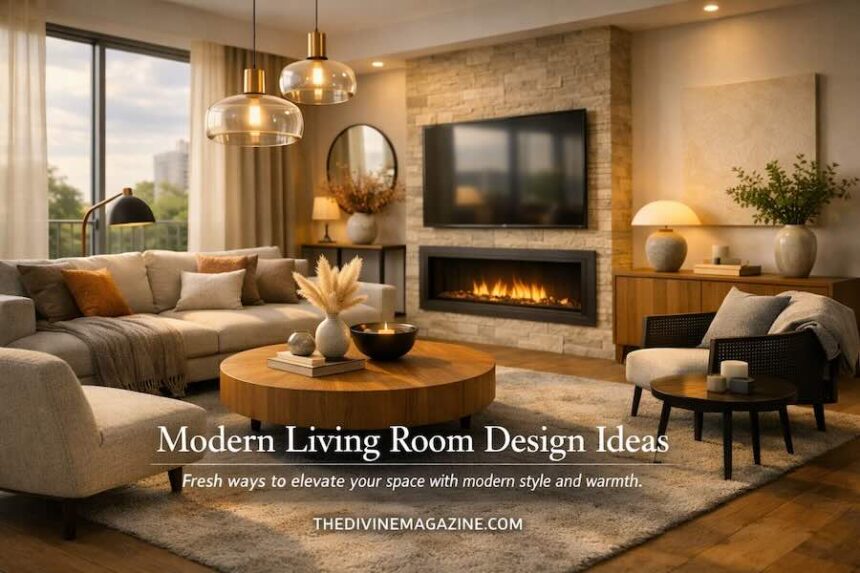
The living room remains the undisputed heart of the home—a sanctuary where families gather to decompress, whether it’s for a weekend movie marathon or a quiet afternoon of reading. In 2026, the most successful interior designs move decisively away from sterile, “showroom” perfection and toward a lived-in balance of high-tech utility, biophilic warmth, and organic comfort. Here is how to revitalize your primary living space this year to create a functional sanctuary.
- Master the Tech-Focused Layout
- Influence Emotion with Color Science
- Transition to Smart, Layered Lighting
- Elevate the Space with Sculptural Drapes
- Curate Connection-Focused Furniture
- Engage the Senses with Signature Scents
- Invest in Tactile Art
- Eliminate Cognitive Load with Integrated Storage
- Ground the Room with Plush Textures
- Create a Flavorful Dining Transition
- Conclusion: The Future of Home Sanctuary
- Frequently Asked Questions
Master the Tech-Focused Layout
Position your entertainment screen for optimal visibility from every seat while remaining mindful of natural window glare. The 2026 aesthetic is entirely defined by “disappearing tech”—utilizing ultra-slim profiles, motorized cabinetry, or ambient digital art modes to ensure the TV screen does not dominate the room’s visual landscape when switched off. To maintain this high-end look, proper cable management is non-negotiable. Learn the best professional techniques for hiding TV wires to keep your walls looking entirely clean and seamless.
Influence Emotion with Color Science
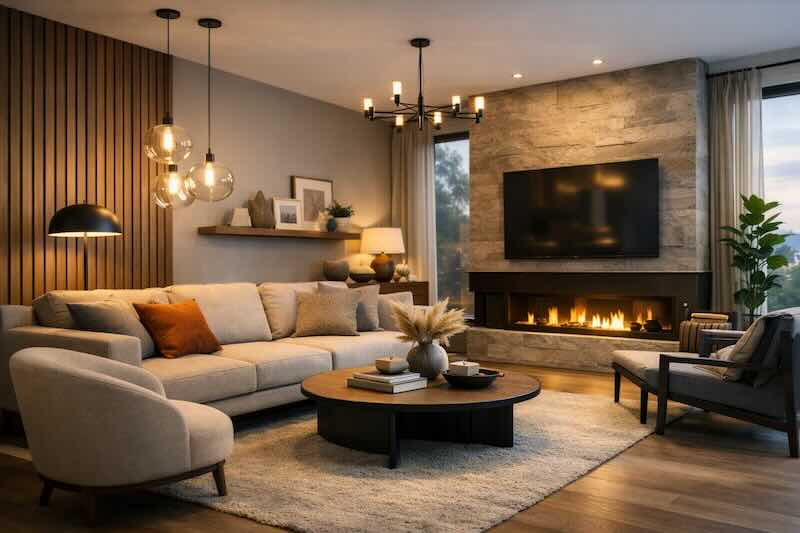
Color is your most powerful tool for subconsciously dictating a room’s psychological energy. For a serene, minimalist atmosphere, 2026 heavily favors “warm neutrals”—think oatmeal, limestone, or sand-colored walls paired with deep indigo navy accents and rich, leafy indoor greenery. If your goal is a high-energy, kid-friendly vibe, consider sun-drenched ochre yellows or rich “earthy terracotta” tones that bring a grounding sense of the natural world indoors.
Transition to Smart, Layered Lighting
Outdated, static lightbulbs are a relic of the past. Modern living spaces utilize **Circadian Lighting**—smart LED systems engineered to shift automatically from cool, blue-white wavelengths during the day to a warm, golden, melatonin-friendly glow in the evening. Use hidden accent lighting behind large furniture pieces, under floating credenzas, or tucked neatly into bookshelves to create a captivating sense of depth and architectural interest without relying on harsh overhead fixtures.
Elevate the Space with Sculptural Drapes
Window treatments serve as the critical “soft architecture” of any room. In 2026, we see a luxury return to heavy, highly tactile drapes crafted from organic linens, raw slub cottons, or recycled velvets. Installing floor-to-ceiling curtains not only offers superior light blocking for afternoon movie nights but also acts as an acoustic dampener, reducing echo and making your main gathering space feel notably quieter, cozier, and more private.
Curate Connection-Focused Furniture
Living furniture in 2026 is structurally engineered to foster human connection. Designers are actively moving away from rigid, matching multi-piece showroom sets and toward low-profile modular sectionals that allow for flexible, face-to-face seating arrangements. Prioritize “Quiet Luxury” materials—specifically high-performance fabrics that feel ultra-premium and soft to the touch but are heavily treated to withstand the accidental spills and daily thrills of active family life.

Engage the Senses with Signature Scents
A room’s ultimate atmosphere is defined by far more than just what meets the eye. Use cold-air essential oil diffusers or soy-based wax candles to establish a signature “home scent profile.” Rich sandalwood, amber, and cedar offer a grounding, sophisticated feel for evening unwinding, while vibrant citrus, bergamot, and eucalyptus help the space feel energized, clean, and crisp during daytime hours.
Invest in Tactile Art
Art provides the true identity and soul of the living room. In 2026, “Tactile Art”—dimensional pieces featuring heavy visible texture, such as woven wool wall hangings, architectural ceramic sculptures, or thick impasto oil paintings—has surpassed traditional flat prints. Choose unique, dimensional pieces that naturally spark conversation and reflect your family’s authentic story.
Eliminate Cognitive Load with Integrated Storage
Visual clutter triggers real cognitive stress and mental fatigue. Utilize seamless floor-to-ceiling built-in cabinetry, hidden-storage fluted ottomans, or decorative woven baskets to keep remote controls, gaming accessories, charging docks, and kids’ toys completely out of sight. A visually tidy room instantly feels physically larger and allows your primary design choices to shine.
Ground the Room with Plush Textures
A high-quality, properly scaled area rug acts as the gravity anchor for your entire layout. Layering a smaller, high-pile plush rug over a larger, durable jute or sisal base is a brilliant way to introduce depth and tactile interest. This layout technique provides a comfortable, soft zone for toddlers to play and instantly makes a large conversational seating area feel intimately connected.
Create a Flavorful Dining Transition
If your main living zone flows into an open-concept dining area, treat that transition zone with equal design intentionality. Use a striking, low-hanging sculptural pendant light to drop a “zone” of intimate warmth directly over the dining table. Subtle touches, such as a raw stone centerpiece or matte-finish artisanal dinnerware, can make everyday family meals feel like a elevated event.
Conclusion: The Future of Home Sanctuary
Redesigning your living room in 2026 is about engineering a versatile environment that supports both your restorative wellness and your daily high-tech needs. By pairing smart home technology with organic textures, biophilic colors, and multi-layered lighting, you can transform the physical heart of your home into an elevated oasis. For certified, professional architectural standards on building healthy, human-centric living spaces, checking out design guidelines from the American Society of Interior Designers (ASID) can provide excellent insight into spatial wellness and acoustic ergonomics. Take your time curating the space, focus on comfort, and let your room evolve alongside your lifestyle.
Frequently Asked Questions
Q: What is the most popular living room color palette for 2026?
A: Warm, earth-derived tones are dominating the industry this year. Specifically, desaturated terracotta, rich sage greens, soft oakmeals, and warm linen-whites are replacing the cold, stark greys of the previous decade to build a welcoming environment.
Q: How can I make a compact, small living room feel physically larger?
A: Hang your drapes completely ceiling-height and extending past the window frame to visually trick the eye upward. Additionally, prioritize “leggy” furniture profiles over blocky, heavy bases to let light pass through and keep more of the floor plane visible, which maximizes perceived square footage.
Q: What are the main benefits of Circadian Lighting in common living spaces?
A: Circadian lighting matches the natural path of the sun. By bathing your space in cool, bright light in the morning, it boosts alertness and productivity. By smoothly shifting into warm, amber tones at night, it minimizes melatonin suppression, helping your family wind down effortlessly. To explore the clinical research behind home illumination and human health metrics, you can read the residential wellness studies updated by the HGTV Smart Home Design Network.
Q: How do I choose the mathematically correct rug size for my layout?
A: Avoid the common mistake of buying a rug that is too small, which makes the room feel unanchored. As a firm rule of thumb, your main seating elements (sofas and lounge chairs) should have at least their front two legs resting comfortably on top of the rug to visually tie the furniture group together.
Q: Is it safe to run TV power cords directly inside drywall to hide them?
A: No, running standard flexible TV power cords inside a wall violates national electrical safety codes and can create a fire hazard. Instead, you must use an in-wall cable routing kit that includes certified, shielded extension romex wiring, or use sleek, surface-mounted paintable cord raceways along the exterior drywall surface.